
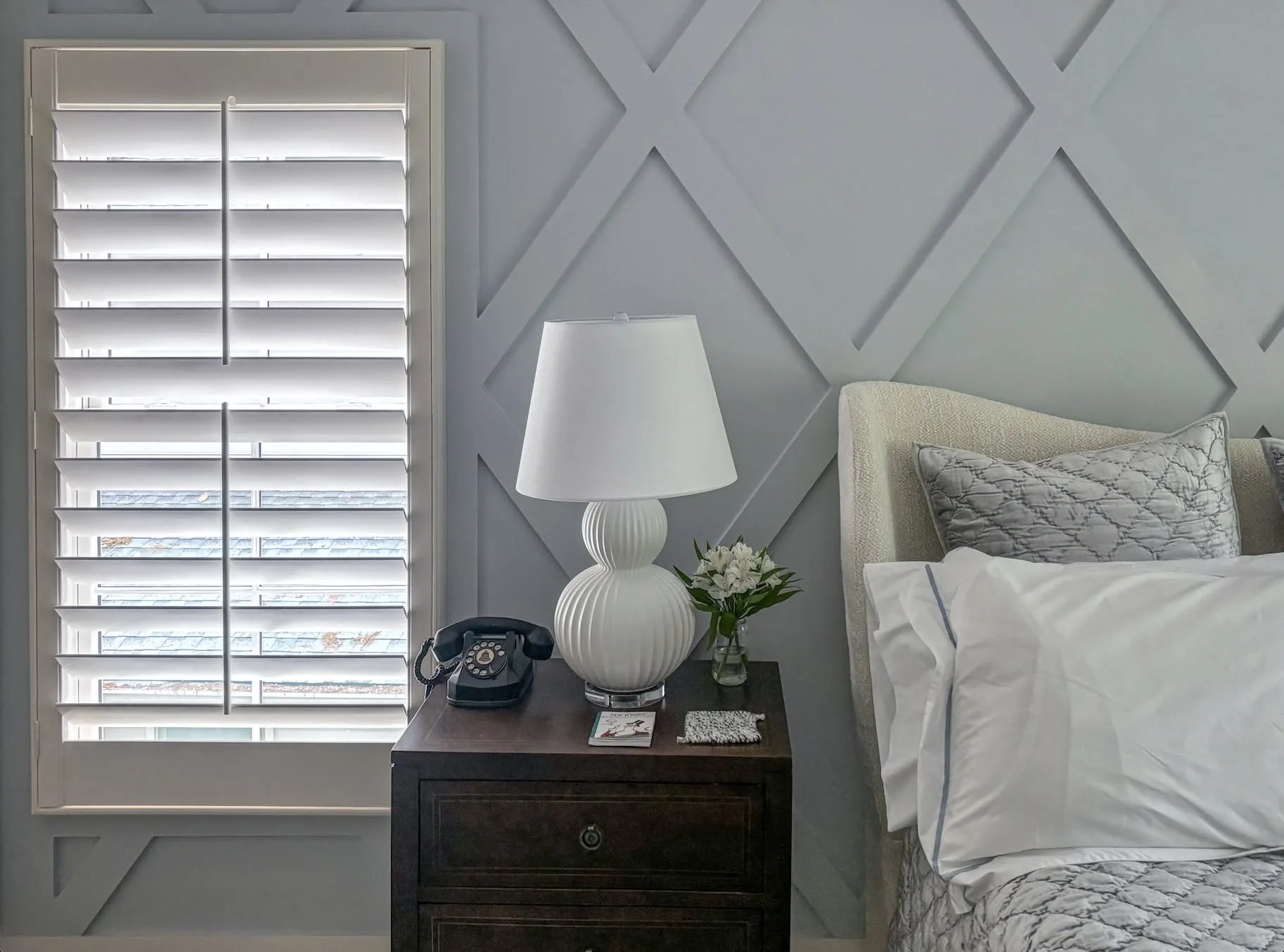
When homeowners start planning plantation shutters, most of the attention goes to louver size, wood type, or paint color. The frame often gets overlooked, but it’s one of the most important decisions in the whole project. The frame is what attaches the shutter to your window, hides gaps, and finishes the look. Choosing the wrong one can mean visible light leaks, an awkward fit, or a finished product that looks slightly off no matter how nice the panels are. At Castleberry Shutters, we walk every customer through frame options before we talk about louvers, because getting this part right is what makes an installation look custom-built rather than store-bought.
Why the Frame Matters
The frame serves two jobs. First, it’s the structural piece that holds the shutter panels and hinges to your window or wall. Second, it’s a major part of the finished appearance, especially since it’s what your eye lands on where the shutter meets the wall. Different frame styles work better depending on your window’s depth, your wall’s condition, and how much light gap you’re willing to live with. The three most common frame types are the L-Frame, the Z-Frame, and the Deco Frame, and each solves a slightly different problem.
L-Frame: The Simple, Versatile Standard
The L-Frame is one of the most widely used shutter frames, and for good reason. It mounts on the face of the wall around the window opening rather than inside a recess, which makes it a flexible option for windows that aren’t deep enough to mount shutters inside the frame itself. The “L” shape refers to the cross-section of the frame, which sits flush against the wall while extending slightly forward to hold the shutter panels.
L-Frames are a strong choice when you want a clean, straightforward look without much decorative detail. They work well on standard windows and are often the most cost-effective frame option since they require less material and are simpler to install. The tradeoff is that L-Frames typically leave a bit more visible light gap around the edges of the panel compared to more advanced frame styles, since the panels close against the frame rather than into it.
Z-Frame: A Cleaner, Tighter Fit
The Z-Frame builds on the L-Frame concept but solves its main limitation. Instead of the panel closing flat against the frame, the Z-Frame includes a rabbet, essentially a small groove, that lets the panel close into the frame rather than against it. This creates a noticeably tighter seal, less visible light gap, and a cleaner appearance where panel and frame blend together.
Z-Frames suit homeowners who want the flexibility of a surface-mounted frame, useful when the window recess is too shallow for an inside mount, but don’t want the light gaps of a basic L-Frame. It’s a popular middle-ground choice: a more refined look without the added cost of a full decorative frame.
Deco Frame: The Finished, Furniture-Grade Look
The Deco Frame is the most decorative and detailed of the three. Rather than a simple functional frame, it’s designed to look like a finished piece of trim or millwork, often with a mitered, picture-frame appearance around the shutter panels. Deco Frames are frequently used when there’s no usable window recess at all, when the wall around the window is uneven or damaged, or when a homeowner simply wants the shutters to make more of a design statement.
Because Deco Frames are mounted on the wall surface with clean, finished edges, they’re also excellent at hiding imperfections, like uneven drywall, old caulk lines, or windows that aren’t perfectly square. This makes them a common choice in older homes or additions where the original opening isn’t as precise as newer construction. The tradeoff is cost, since Deco Frames require more material and finishing work than the other two styles.
How to Decide Which Frame Is Right for You
The right frame usually comes down to three questions: How deep is your window recess? What condition is the surrounding wall in? And how much are you willing to invest in the finished look versus the panels alone? If your windows have a good, deep recess and solid walls, an inside-mounted frame with L or Z detailing may be all you need. If your recess is shallow or your walls have imperfections you’d rather not draw attention to, a Deco Frame will do more of the visual work.
Frame terminology can also vary between manufacturers, which is part of why an in-home consultation matters. What one company calls a Deco Frame, another might name differently, so it helps to see actual samples on your own windows before deciding.
How Castleberry Approaches Frame Selection
Every shutter installation starts with a careful look at your windows, not just your style preferences. Our team measures each window’s depth and condition and recommends the frame that will fit properly and look right, whether that’s a straightforward L-Frame, a tighter-sealing Z-Frame, or a fully finished Deco Frame. Because we manufacture every shutter in our own Woodstock, Georgia workshop and handle installation ourselves, we match the frame to the exact window in front of us rather than forcing a one-size-fits-all solution.
If you’re not sure which frame type makes sense for your home, that’s exactly the kind of question we’re happy to answer in person. Reach out to Castleberry Shutters to schedule a consultation and see the frame options for yourself.