
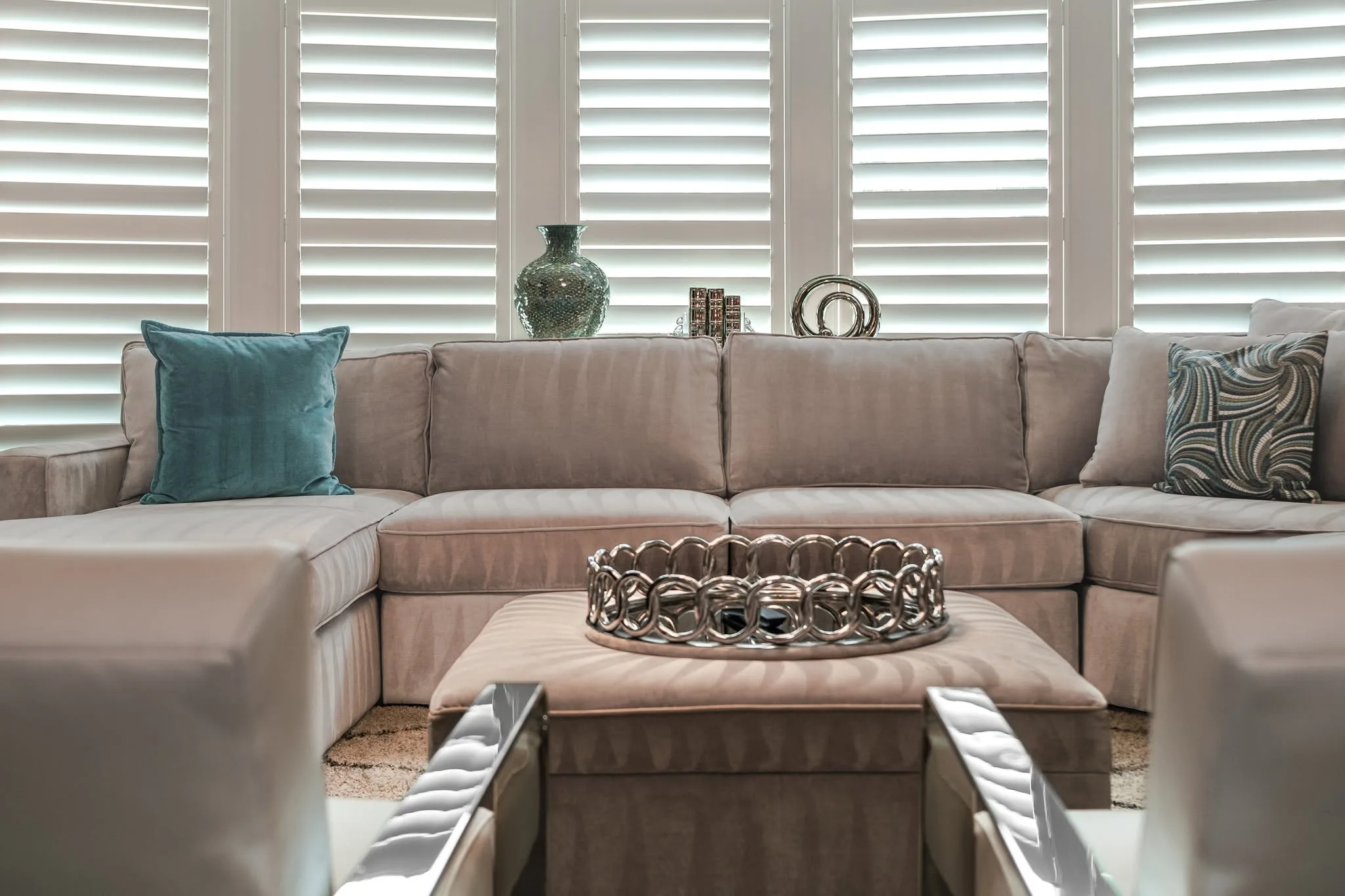
Atlanta homeowners searching for wood shutters eventually run into the same fork in the road: real wood or faux wood? Both are popular, both look great in photos, and both salespeople will tell you theirs is the better option. At Castleberry Shutters, we’ve been handcrafting real wood shutters in our Woodstock workshop for over 70 years, so we’ll be upfront that we have a point of view here. But we also believe homeowners deserve a straight answer about what actually separates these two materials, especially in a climate like ours.
What’s the Difference?
Faux wood shutters are typically made from PVC, composite materials, or a wood-composite blend. They’re manufactured to mimic the look of real wood, often at a lower price point. Real wood shutters, like the ones we build, are milled from solid wood, most commonly poplar, basswood, or in our case, American-grown white poplar. The difference isn’t just marketing language. It shows up in weight, feel, finish, and how the shutters perform over time.
Durability and Atlanta’s Climate
Atlanta summers bring heat and humidity, and that combination matters when you’re choosing window treatments. Faux wood shutters are often marketed as more humidity-resistant, which is true in very high-moisture environments like bathrooms or laundry rooms with poor ventilation. PVC and composite materials don’t absorb moisture the way wood can, so they hold up well in rooms with constant steam or splashing water.
Real wood, when properly kiln-dried and finished, handles Atlanta’s climate just fine in the vast majority of rooms in a home, including rooms with normal humidity swings from HVAC cycling or seasonal changes. The key is quality construction. Poorly dried or finished wood shutters can warp over time, which is where faux wood earned its reputation as the “safer” choice. Well-built wood shutters, using properly cured lumber and a durable finish, don’t have that problem. This is why the quality of the manufacturer matters as much as the material itself.
Weight, Feel, and How They Operate
One thing photos never capture is how a shutter feels when you actually open and close it. Real wood shutters have heft and a smooth, solid motion that comes from quality hinges and joinery. Faux wood shutters are often lighter, which can be useful on oversized windows where weight becomes a structural concern, but that lighter feel can also come across as less substantial, especially on larger panels or taller windows common in Atlanta’s older homes and newer builds alike.
Over time, faux wood materials can also show their age differently than real wood. PVC-based shutters may yellow or become brittle in windows that get consistent, direct sun, which is common in many south- and west-facing Atlanta homes. Real wood, properly finished, tends to age more gracefully and can typically be refinished if needed, extending its life even further.
Style and Resale Value
Real wood shutters carry a warmth and authenticity that’s difficult to replicate with composite materials. The natural grain, the way light plays across a properly finished wood surface, and the custom paint or stain options all contribute to a higher-end look. This matters for homeowners thinking about resale. Real wood plantation shutters are widely viewed as a premium home feature, often mentioned specifically in real estate listings, while faux wood shutters are typically viewed as a practical, budget-conscious option rather than a value-adding upgrade.
That said, faux wood absolutely has its place. If you’re shuttering a laundry room, a bathroom with poor ventilation, or a rental property where long-term durability against neglect matters more than aesthetics, faux wood is a reasonable and cost-effective choice.
Cost Considerations
Faux wood shutters generally cost less upfront, which is part of their appeal. Real wood shutters represent a bigger investment, but that investment reflects the materials, the craftsmanship, and, in our case, a lifetime guarantee on every product we build. For many Atlanta homeowners, the calculation comes down to how long they plan to stay in the home, which rooms need shutters, and how much they value the look and feel of genuine wood versus the lower price point of a composite alternative.
The Castleberry Difference
Every shutter we make starts as American-grown white poplar, milled and finished in our Woodstock workshop. We don’t import our wood or outsource our manufacturing, which means we control the drying process, the joinery, and the finish quality from start to finish. That’s how we’re able to back every shutter with a lifetime guarantee, something that’s much harder to offer with mass-produced faux wood products.
We also handle installation ourselves, so the same team that understands the wood is the team fitting it to your windows. For most Atlanta homes, especially living rooms, bedrooms, and formal spaces, real wood shutters offer the better long-term combination of durability, style, and value. For high-moisture utility spaces, faux wood can make sense as a practical alternative.
If you’re weighing wood against faux wood for your own home, we’re happy to talk through your specific rooms and help you land on the right material for each one. Reach out to Castleberry Shutters to schedule a consultation.