
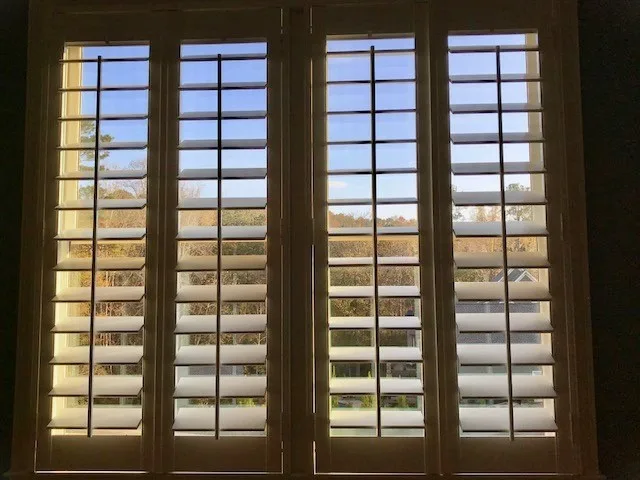
Anyone comparing window treatments eventually asks how long do plantation shutters last, and the honest answer depends heavily on what they’re made of, how they’re built, and how they’re cared for. Real, well-constructed wood plantation shutters can last decades, often outliving other window treatments by a wide margin, while poorly made or lower-grade shutters can start showing problems within just a few years. At Castleberry Shutters, we’ve been building and repairing real-wood shutters since 1954, and longevity is something we think about at every stage of manufacturing, not just at the point of sale.
What Actually Determines Shutter Lifespan
Three factors drive how long a plantation shutter lasts: the quality of the material, the quality of the construction, and the environment the shutter lives in. Material quality starts with the wood itself. Properly kiln-dried lumber, dried slowly and evenly to remove excess moisture, resists warping and cracking far better than wood that’s rushed through drying or never properly dried at all. Construction quality covers everything from joinery and hinge selection to how carefully a shutter is sanded, primed, and finished before it leaves the workshop. Environment matters too. A shutter installed in a stable, climate-controlled interior room will generally outlast one exposed to constant humidity swings, direct water contact, or intense, unfiltered sun.
Typical Lifespan by Material Type
Real wood plantation shutters, when properly built and finished, commonly last 20 to 30 years or longer, and many well-maintained wood shutters remain fully functional well beyond that. This is part of why manufacturers who are confident in their materials and construction, including Castleberry Shutters, are willing to back their products with a limited lifetime guarantee.
Composite or faux wood shutters typically have a shorter practical lifespan, often in the 10 to 15 year range, particularly in rooms with heavy sun exposure where PVC-based materials can yellow, become brittle, or warp over time. Vinyl and lower-cost imported shutters tend to fall on the shorter end of that range, especially when hinges and hardware aren’t built to the same standard as the panel itself.
The Role of Finish and Wood Preservation
A shutter’s finish does more than provide color. It’s the primary barrier protecting the wood from moisture absorption, which is the leading cause of warping, swelling, and premature failure in wood window treatments. This is where proper wood preservation techniques, including kiln-drying, sealing, and quality paint or stain application, make the biggest long-term difference. Poorly sealed wood is vulnerable to humidity infiltration at the grain level, which can cause slow, cumulative damage that isn’t always visible until a louver starts to bind or crack.
At Castleberry, every shutter is sanded, primed, and finished by hand in our Woodstock workshop, using a process built around long-term durability rather than speed.
Simple Maintenance That Extends Shutter Life
Real wood shutters don’t require much upkeep, but a few habits meaningfully extend their lifespan. Dust louvers regularly with a soft cloth or microfiber duster to prevent buildup that can work into hinges and moving parts over time. Avoid harsh chemical cleaners, which can strip finish and expose bare wood to moisture; a slightly damp cloth with mild soap is usually sufficient for spot cleaning. Keep an eye on hardware, since a loose hinge or tilt rod connection is far easier to fix early than after it causes uneven wear on the louver itself. In rooms with heavy moisture, like a kitchen near a sink or a bathroom with limited ventilation, wipe down shutters after periods of heavy steam exposure rather than letting condensation sit on the finish.
Signs Your Shutters Need Repair (Not Replacement)
Many issues that seem like signs of a failing shutter are actually simple, inexpensive repairs. A loose or squeaking hinge, a louver that’s slipped out of alignment, or a small chip in the paint finish can typically be fixed without replacing the entire panel. More significant warping or splitting is less common in properly built real wood shutters, but when it does happen, it’s usually isolated to one or two louvers rather than the whole unit. Working with a manufacturer who can service what they built, rather than routing repairs through a third party, generally means faster, more accurate fixes. You can find answers to common material and warranty questions on our FAQ page, and learn more about our repair process on our repairs page.
What a Lifetime Guarantee Should Actually Cover
Not all “lifetime guarantees” mean the same thing, so it’s worth asking specifically what’s covered before buying. A meaningful guarantee should cover material defects and craftsmanship issues for as long as you own the product, backed by a company that’s still around, and still local, to honor it. Castleberry Shutters backs every plantation shutter with a limited lifetime guarantee, which is part of why we control manufacturing from raw lumber to finished, installed product rather than outsourcing any part of the process.
Understanding how wood preservation techniques protect wood from decay and moisture damage helps explain why some shutters last decades while others fail within a few years. It comes down to how the wood is treated and finished long before it’s ever installed in your home.
Key Takeaways
- How long plantation shutters last depends primarily on material quality, construction, and the environment they’re installed in.
- Properly built real wood shutters commonly last 20 to 30 years or longer, often outlasting composite or vinyl alternatives.
- A sealed, well-applied finish is the main defense against moisture damage, the leading cause of shutter warping and failure.
- Simple maintenance, regular dusting, gentle cleaning, and prompt hardware fixes, meaningfully extends shutter lifespan.
- A meaningful lifetime guarantee should be backed by a manufacturer who remains reachable and able to service what they built.
FAQ: Plantation Shutter Lifespan
How long do real wood plantation shutters typically last?
Well-built, properly finished real wood shutters commonly last 20 to 30 years or more, with many lasting a lifetime when properly maintained.
Do vinyl or faux wood shutters last as long as real wood?
Generally not. Composite and vinyl shutters typically last 10 to 15 years, particularly in rooms with heavy sun exposure.
What’s the most common cause of shutter damage?
Moisture infiltration through an improperly sealed or worn finish is the leading cause of warping, swelling, and long-term wood damage.
Can damaged shutters usually be repaired instead of replaced?
Yes, in most cases. Loose hinges, misaligned louvers, and minor finish damage are typically simple, inexpensive repairs rather than full replacements.
What should a lifetime guarantee on shutters actually cover?
It should cover material and craftsmanship defects for as long as you own the product, backed by a manufacturer still able to honor and service the claim.
If you’re wondering how long your current shutters might last, or you’re comparing options for a new installation, reach out to Castleberry Shutters. We’re happy to walk through our materials, finishing process, and guarantee in detail.