
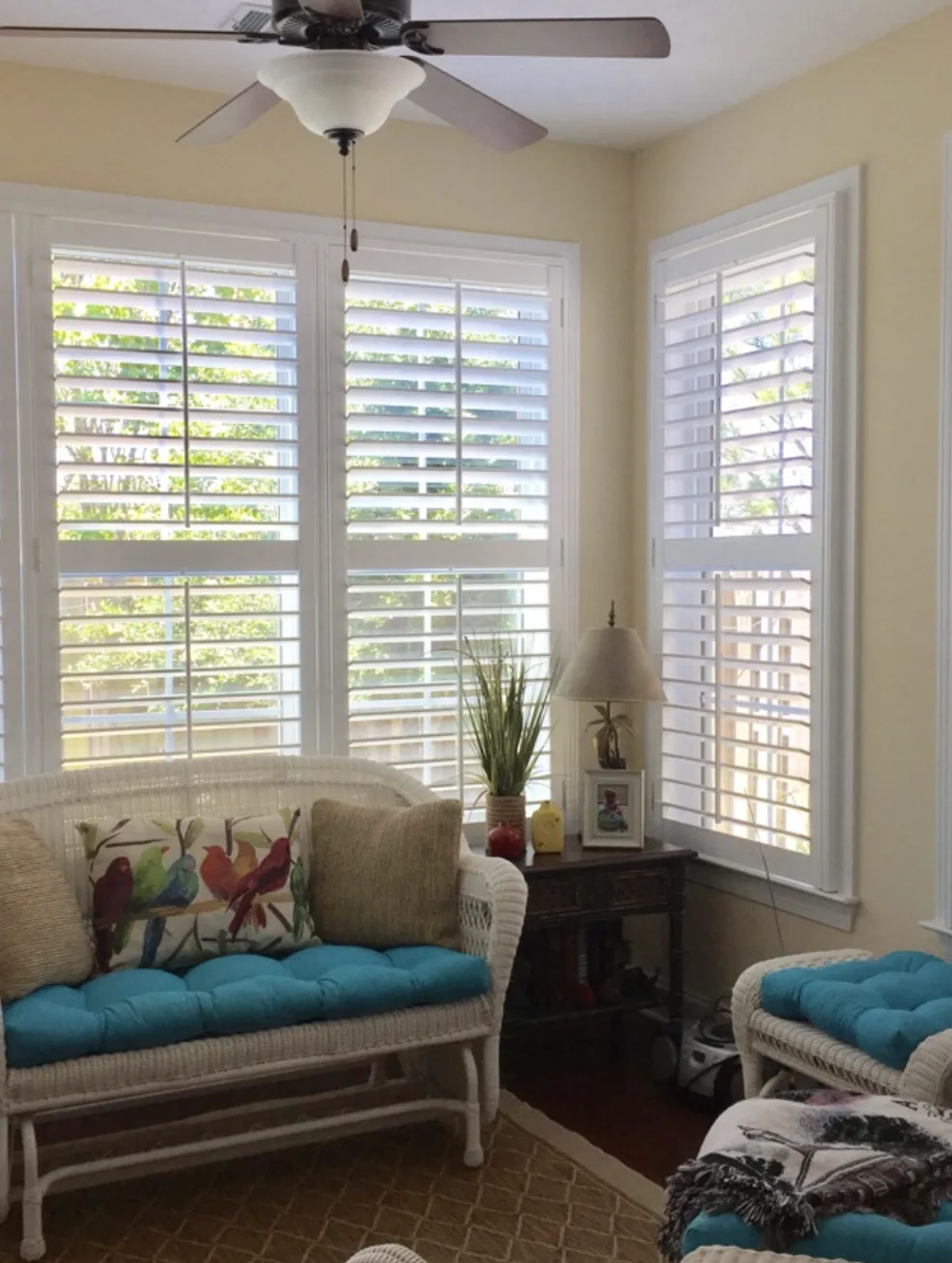
Plantation shutters can absolutely stand on their own, but layering additional window treatments with plantation shutters is one of the easiest ways to add softness, extra light control, or a more finished, designer look to a room. The idea sometimes surprises homeowners who assume shutters are an either-or decision against curtains or shades, but the two work well together when they’re paired with a little intention. At Castleberry Shutters, we get asked about layering options often enough that it’s worth walking through what actually works and why.
Why Homeowners Layer Window Treatments with Plantation Shutters
Shutters are excellent at precise light control, privacy, and durability, but they’re also a hard, architectural material by nature. In rooms with a lot of wood trim, wood floors, or other hard surfaces, adding a soft layer like drapery or a woven shade can balance the room visually and add texture that shutters alone don’t provide. Layering also solves a functional gap: shutters control daytime light and privacy exceptionally well, but for a bedroom that needs full blackout at night, an added layer of room-darkening drapery or a cellular shade behind the shutter can close that gap without giving up the shutters’ daytime benefits.
Pairing Shutters with Drapery
The most common combination is full-height or floor-length drapery panels mounted just outside the window frame, with plantation shutters installed inside the recess. This setup lets the shutters handle everyday light and privacy control while the drapery adds color, texture, and the option of full coverage at night or for movie nights and naps. Because shutters sit inside the window opening and drapery hardware mounts to the wall above and beside it, the two treatments don’t interfere with each other mechanically, which makes this one of the easiest layering combinations to execute.
For a more tailored look, sheer drapery panels paired with shutters can soften a room without blocking as much light, which works especially well in living rooms and dining rooms where you want an elegant layer without losing brightness.
Café-Style Shutters with a Curtain Layer
Café shutters, which cover only the lower half of a window, are another popular way to combine window treatments with plantation shutters. The shutters handle privacy and light control on the bottom half of the window, which matters most during the day, while a curtain rod and panel above cover the full window when you want more coverage or a softer overall look at night. This combination is especially popular in kitchens, breakfast nooks, and bathrooms, where full privacy isn’t needed during the day but a finished look still matters.
Layering with Shades or Blinds for Added Function
In rooms that need more light control than shutters alone provide, such as media rooms, nurseries, or west-facing bedrooms with strong afternoon sun, pairing shutters with a blackout or light-filtering shade mounted behind them can add functional flexibility without changing the room’s overall look from the outside. Our blinds and shades page covers the material options available if you’re considering this kind of combination, from woven wood to blackout-lined roller shades.
Rooms Where Layering Makes the Most Sense
Not every room needs a second window treatment layered with shutters, and knowing where to add one versus where to keep things simple matters. Living rooms and dining rooms often benefit most from drapery layering since these are typically showcase spaces where texture and color add visual interest. Bedrooms benefit from a functional layer, like a blackout shade, more than a purely decorative one. Kitchens and bathrooms usually do well with café-style shutters alone, or with a light curtain layer if the room gets significant street-facing exposure.
Getting the Combination Right
The details matter more than they might seem: drapery hardware needs enough clearance to avoid interfering with shutter panels when they’re open, and any layered shade needs to be mounted so it doesn’t visually compete with the shutter frame. Seeing finished examples of layered installations can help clarify what will work in your own space, which is part of why we keep an updated project gallery with real installations from homes throughout our service area.
Layering has long been part of how window treatments function in a home, going back to when window coverings served the dual purpose of insulation and privacy well before shutters and curtains became a design choice rather than a necessity.
Key Takeaways
- Layering window treatments with plantation shutters adds softness, texture, and extra light control without sacrificing the shutters’ daytime function.
- Full-height drapery paired with inside-mounted shutters is one of the easiest and most common combinations.
- Café-style shutters work especially well with a curtain layer above for kitchens and bathrooms.
- Bedrooms and media rooms benefit most from a functional layer, like a blackout shade, added behind the shutters.
FAQ: Window Treatments with Plantation Shutters
Do plantation shutters work with curtains, or should I choose one or the other? They work well together. Shutters handle daily light and privacy control, while curtains or drapery add texture, color, and extra coverage when needed.
What’s the best window treatment to pair with shutters in a bedroom? A blackout shade or lined drapery panel behind the shutters gives you full-room darkening at night while keeping the shutters’ daytime function intact.
Do café-style shutters need a curtain layer? Not necessarily, but many homeowners add a curtain rod above café shutters for extra coverage or a more finished look in kitchens and bathrooms.
Will layering interfere with how my shutters open and close? Not if hardware is installed with proper clearance. Drapery rods typically mount outside the window frame, away from the shutter panels.
If you’re considering layering window treatments with plantation shutters in your home, reach out to Castleberry Shutters. We can help you plan a combination that fits both your style and how each room actually gets used.